
What is Perioral Dermatitis?
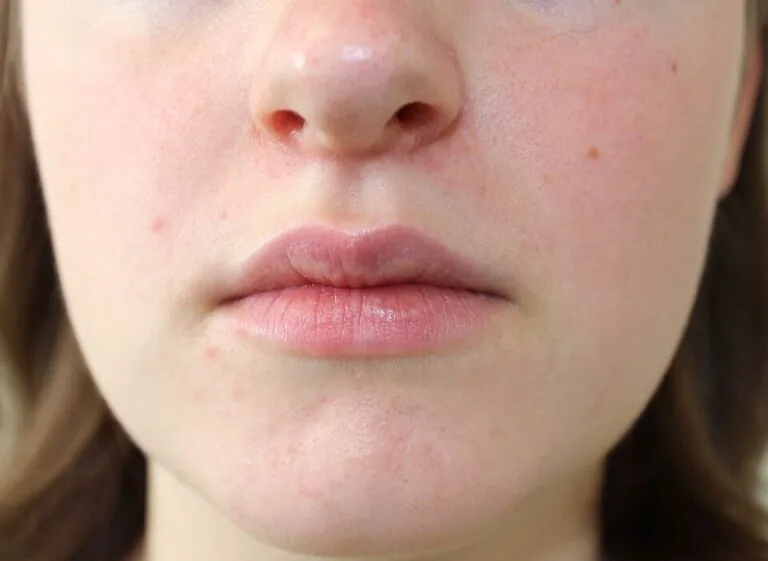
Perioral dermatitis is a transient or recurrent and persistent skin disorder that most often affects the area around the mouth, hence its name. It bears a strong resemblance to localized acne vulgaris. Because it also likes to occur around other orifices such as the eyes, nose, and ears, it is also referred to as "periorificial dermatitis".
The disease tends to appear more often in fair-skinned, pale people. It tends to affect people with a history of rosacea more often. Some patients that develop POD have used topical steroids prior. It is also more common in people with more sensitive or dry skin.
What Causes Perioral Dermatitis?
The exact cause of perioral dermatitis remains unknown. Most commonly, the condition is precipitated by discontinuation of topical steroids which had been applied either directly onto the skin or intranasally. It can also be triggered by inadequately chosen moisturizers, sunscreens, and other cosmetics, improper face washing, or hormonal changes. Even though it visually resembles regular acne, it cannot be classified as its subtype; in perioral dermatitis there are no comedones, the characteristic primary lesions in acne vulgaris.
Signs and Symptoms
The primary lesions in perioral dermatitis are reddened papules, often accompanied by surrounding redness and light peeling or scaling. Occasionally, single vesicles or smaller pustules can develop. The lesions typically affect the perioral area with a characteristic omission of the vermilion of the lips, which may appear as a lightened ring surrounding the mouth. Sometimes the rash can also show at the sides of the nose or on the skin next to the eyes. It can last from months to years and be either transient or recurrent in its course. No general symptoms like fever or chills have been noted, but localized itching or burning is not uncommon.
Treatment Options
Dr. Patel treats perioral dermatitis much like rosacea, its close relative.
Prescription Creams
Metronidazole, azelaic acid, ivermectin, permethrin, sulfur, or pimecrolimus.
Oral Antibiotics
Doxycycline, with minocycline or azithromycin as alternatives.
Avoid Triggers
Steroids, heavy or occlusive products, tartar-control toothpaste, cinnamon mints.
For a minor outbreak, prescription creams are usually enough. For a bigger flare-up, Dr. Patel adds a short course of an oral antibiotic to calm the inflammation: usually doxycycline, with minocycline or azithromycin as alternatives, including for patients who are allergic to doxycycline. In pregnancy, if treatment is necessary, erythromycin seems to be the therapy of choice.
Daily Skincare Measures
- Use a gentle, dermatologically tested cleanser. Wash your face with lukewarm water twice a day, in the morning and in the evening, as well as after working out.
- Look for non-comedogenic skin care products, and avoid heavy face creams, thick emollient creams, and occlusive makeup.
Topical and inhaled steroids can make perioral dermatitis worse, so we try to minimize them. Fluorinated or tartar-control toothpaste and cinnamon mints may also contribute.